What the Heck Are Staffordshire Dogs and Why Were They So Popular With Victorians?
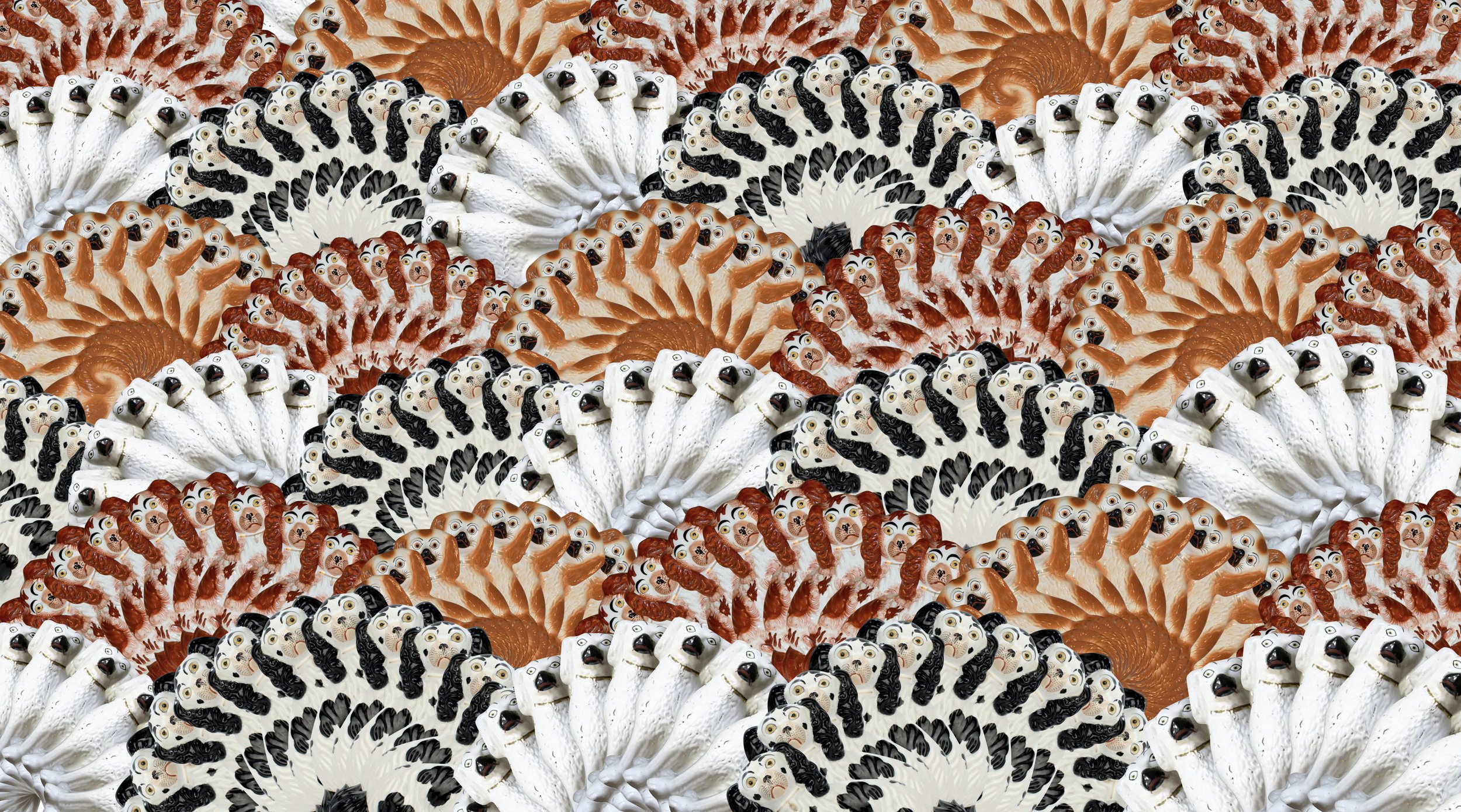
If you give a Victorian a Staffordshire dog, they’ll need 10 more pairs to go with it.
Equal parts amusing, adorable, and odd, Staffordshire dogs are the quintessential Victorian decoration that never went out of style. Even in the 1920s, when they fell out of fashion as popular collectibles, they still managed to be so uncool that they were somehow cool again.
I’ve been obsessed with Staffordshire dogs for the past 3 years (finally acquiring my own pair from my grandmother for Christmas in 2020—thanks grandma Carol!). What originally struck me about these little figures, was how they perfectly captured the anxious expression of a good dog who knows she’s done something bad. She’s trying to play it cool but also can’t quite remember what it was that she did in the first place…
So when I found out that Staffordshire dogs were originally from the 1800s and that they were insanely popular at the time, I had to know more. I’ve combed through many a website describing how Staffordshire dogs were made and how to tell a real from a fake, but I’ve yet to find a satisfying answer to what fueled the Victorian era’s obsession with them. So I’ve done my best to piece it together myself. What follows is the story (as best I can tell it) of why Staffordshire dogs were so popular and what they meant to the people who collected them.

So, what the heck are Staffordshire dogs anyway?
First things first. Staffordshire dogs are small, earthenware figurines that were popular in the Victorian era. Ranging from about 4 to 12 inches high, they were small decorative objects that adorned fireplace mantels and windowsills in Victorian homes. The figurines were produced roughly from 1720 to 1900 (but were most popular towards the end of the 19th century).
Here’s where it gets a bit more interesting. Staffordshire dogs always came as a pair and took the forms of various pedigree dog breeds posed sitting at attention or standing guard. Popular variations included pugs, greyhounds, poodles, dalmatians, and—the contemporary fan favorite—King Charles Spaniels. But more on that later.
Staffordshire dogs (also sometimes called Wally dogs, pot dogs, and china dogs) get their name from the area where they were originally produced—Staffordshire, England. Staffordshire was a hotbed for ceramic production in the 18th and 19th centuries due to an abundance of local clay and coal, and there are many other types of “Staffordshire figurines” besides dogs.
And while they were sold in pairs, you’d be pressed to find a home with only one set of Staffordshire dogs. These puppies were popular collectors’ items in their heyday, and many people acquired them by the dozens. It wouldn’t have been an uncommon sight to see an entire curio cabinet stuffed to the brim with Staffordshire dogs!
But funnily enough, while an authentic pair of Staffordshire dogs can fetch (pun intended) several hundred if not thousands of dollars at auction today, these charming figurines were originally sold at markets or fairs for relatively cheap prices. Made by the thousands, Staffordshire dogs were some of the first “mass-produced” decorative accents!

Portrait of Queen Victoria with a King Charles Spaniel, presumably Dash. After Sir George Hayter (1792-1871), Queen Victoria when Princess, c.1866-70, Royal Collection (source).
The Historical Context: A Quick Overview of the Victorian Era
So when was all this happening, anyway? As I mentioned already, Staffordshire dogs were produced and collected during the Victorian era. This is a time period that has garnered a lot of attention and fascination from later generations. If you’re curious, check out this episode of The Render, the podcast I co-hosted, to get a more in-depth history lesson on the Victorian era.
For the sake of this post, I’ll give a quick summary of the relevant basics: The Victorian era refers to a time period in the United Kingdom that parallels the reign of Queen Victoria from 1837 to 1901. This period, which is considered the definitive height of the British empire, was marked by ingenuity, reforms of all kinds, and some weird habits.
One huge development of the era? It was the first time in Western history that people left their homes to go to work. Prior to 1760, Britain’s economy was based on agriculture and crafts, which meant that most work happened in the home or on the family farm. But the Victorian era came hot on the heels of the Industrial Revolution, which ushered in a new economy based on manufacturing and large-scale industry. And that required workers to leave their homes and commute to a factory or manufacturing plant for the day’s work.

Illustration of power looming in a Victorian factory, c. 1835 (source).
So it shouldn’t be a surprise that Victorians loooved their homes. The outside world had become a dangerous and infamously dirty place, but the home, by contrast, was a sanctuary. Victorians idealized and celebrated their homes, and this changed how they decorated them. People shifted away from treating their homes like a showcase for their wealth and began making decorative decisions based on their individual tastes.
So that’s the stage upon which Staffordshire dogs were set. But if their homes were so important to the Victorians, then surely the decor that they filled them with would have been important too, right? In order to unpack that, we have to look at two of the Victorian’s favorite things: clutter and collections.

A painting from 1882 by Henry Treffry Dunn (1838–1899) depicting the interior of a Victorian home. “Dante Gabriel Rossetti; Theodore Watts-Dunton,” gouache and watercolor on paper, National Portrait Gallery (source).
Clutter and Collecting in the Victorian Home
Stepping back through time and inside a Victorian home, the first thing you might notice is a lot of stuff.*[1] The Victorians loved clutter and their homes were very busy. Think: interiors steeped in dark colors (great to hide the soot from all that pollution!), patterns galore, and every surface covered by rugs, art, tapestries, tablecloths, doilies, vases, decorative trinkets… even the ceilings were often wallpapered!
Why so much stuff? The Victorians saw their homes as reflections of themselves and it was important that their individuality was expressed through their decor. To them, an empty room signaled a lack of taste. And no self-respecting Victorian wanted to be thought of as tasteless! Luckily, there was an easy way to inoculate yourself against that kind of accusation—by being an avid collector.
But before we unpack Victorian collections (metaphorically speaking, thankfully), we have to understand that this was a group of people very invested in personal development. They had lots of hobbies and spent their time learning new languages, playing musical instruments, sewing, needlepointing, etcetera. What does that have to do with collections? Well, the absolute most-popular-by-a-landslide hobby of the period was just that—collecting.

Illustration showing a Victorian showroom and their cluttered aesthetic. The Philadelphia Times. Philadelphia, Pennsylvania. October 31, 1891. Page 2 (source).
Collecting was, as stated by Michael W. Hancock (whose PhD on the subject I consulted for this post), “a conspicuous national pastime.” Everyone and their mother was collecting. Even Charles Darwin! In fact, people of all classes, not just the wealthy, participated. The hobby was so prolific that contemporary literature frequently and unironically referred to it as “mania.”
What were the Victorians collecting? Everything from thimbles to tea cups, eggs, stamps, sea shells… even Staffordshire dogs.*[2] You name it, the Victorians collected it.*[3]
And while what they collected was certainly important, the why was equally so. In the Victorian mind, collecting was a hobby practiced by intelligent, cultured members of society. To participate in it, then, was a way to show that you were intelligent and cultured. Said another way, collecting was a strategy that Victorians could use to “design” the identities that they wanted for themselves. Where we have meticulously curated Instagram feeds, the Victorians had collections.
So what was so exciting about ceramic dog figurines? Well, it turns out that dogs were endowed with special meaning to Victorians and they articulated something very desirable about those who collected them.

There was a strong link between dogs and family life in the Victorian era. Charles Burton Barber (1845–1894), “Off to School,” 1883, oil painting (source).
What Do Dogs, Queen Victoria, and Well-Mannered Children Have in Common?
Here’s a fun fact: the Victorians are credited with inventing the idea of the “family dog” and were the first to keep dogs as pets in the Western world.
You might be thinking, “no way—people had pets way before then!” And while it’s true that domesticated animals were a thing long before the Victorians, it actually wasn’t until the late 18th century in Britain that household pets became a concept that was socially acceptable.
Before then, the common attitude towards domestic animals was that they should earn their keep (catch mice, eat bugs, scare off would-be burglars) or become the next meal. The only people who kept dogs for pets, the contemporary thinking went, were frivolous and indulgent aristocratic women.*[4]
This changed in the Victorian era, largely due to the influence of Queen Victoria.
If you don’t know, nowadays Queen Victoria is often considered the Original Influencer. During her reign, everything she wore or did became an instant trend. She popularized decorating with Christmas trees during the holidays and her serpentine engagement ring became the standard style for engagement rings at the time.

Portrait of Queen Victoria’s favorite pets, including Dash (King Charles Spaniel), Lory (parrot), Nero (greyhound), and Hector (Scottish deerhound). Edwin Landseer (1802–1873), “Her Majesty’s Favorite Pets,” c. 1838 (source).
Queen Victoria also kept many pets throughout her reign—beginning with her childhood companion Dash, a King Charles Spaniel. It’s widely documented that the queen loved her pets and she is even quoted as saying she had a “beautiful collection” of them.

Portrait of Dash, Queen Victoria’s childhood King Charles Spaniel. She described him as “Dear little Dashy… quite my playfellow, for he is so fond of playing at ball and of barking and jumping.” Edwin Landseer, “Dash,” 1836 (source).
It’s no surprise that owning a dog became acceptable, if not down-right fashionable, in Victorian society. In fact, professor of Modern British History, Jane Hamlett notes that “pedigree dog breeding really takes off in the Victorian period.” Owning one of these well-bred dogs, say a pug, greyhound, or King Charles Spaniel, became a new way for wealthier Victorians to showcase their social status. Perhaps the thinking went, if you couldn’t afford a dog, you could buy a Staffordshire dog instead. And, if you could afford a dog, why not get a few dozen Staffordshire figurines too, for good measure.
It’s also no coincidence that Staffordshire dog figurines exclusively depicted pedigree dog breeds. Remember that the most popular variety were King Charles Spaniels, which was the breed of Queen Victoria’s beloved dog, Dash. It’s easy to imagine that owning a Staffordshire figurine (or a collection of them) was a way to align yourself with the tastes of the Queen and show that you too were a fashionable person with good taste.

Dogs were often depicted in paintings of the era watching over the bodies of their deceased masters—demonstrating their humility and loyalty, even after death. Briton Riviere (1840–1920), “Requiescat,” 1888, oil painting, Art Gallery of New South Wales (source).
But there’s more to the story still. During this time period dogs became synonymous with family life. They were symbols of loyalty, courage, and unwavering companionship—all values that the Victorians held in high esteem. It even became common practice in the Victorian era, for children to raise pets, specifically dogs (sorry cats*[5]), as a way to learn responsibility, kindness, and commitment. Talk about a successful rebrand. Dogs were now considered bone-afide members of the family, and their owners gave them names, personal narratives, and even a dignified resting place when they died (pet cemeteries were a big thing in 18th-century London, but some dogs had even stranger fates).
If dogs were symbols of all these great things, Staffordshire dogs—their ceramic counterparts—couldn’t have been far behind. It seems likely that the Victorians saw these decorative figurines as physical manifestations of the virtues of dogs, and displaying them loud and proud in your home was a way to broadcast that you were a person of praise-worthy morals.

A Tail of Two Puppies
Staffordshire figurines seem to have fulfilled many needs for their Victorian owners—they satiated their love of collecting and offered an opportunity to communicate so much more about those who collected them. They were an affordable way to emulate their beloved queen and her collection of pedigree dog breeds. They signaled one's social class and wealth. They endorsed their owners' morality and good values. And, finally, they were charming depictions of animals who may have been very real parts of the family—perhaps even a way to remember a beloved family pet who’d passed on.
I think at the core of Staffordshire dogs’ enduring appeal today is their accessibility. Once sold out of baskets on the street, these pieces have always been democratic, affordable art. You didn’t need a lot of money to purchase them then and you don’t need an art degree to appreciate them now. If you’re ready to acquire your own pair, start the hunt online on sites like 1stDibs or Chairish. Local estate sales or even Craigslist might be a more affordable option. Even try calling up your grandparents to see if they have any they’d be willing to part with!
It’s easy to imagine that we’re experiencing Staffordshire dogs, or as director of the Museum of the Home Sonia Solicari calls them, “souvenirs from history” in a similar way to how the Victorians might have, way back in the 1800s. Imagine stumbling upon a pair of goofy ceramic figurines that have an uncanny resemblance to little Lucky, your family’s cross-eyed King Charles Spaniel. If it were me, I’d have to have them. And I’d have to have 10 more pairs, too.
Footnotes:
*[1] If you’ve ever heard the term “bric-à-brac,” it refers to the proliferation of decorative objects Victorians displayed in their homes (it’s also really fun to say).
*[2] This Stanford GSB study even found that people are the most likely to begin a collection if they possess two of an item. Seeing as Staffordshire dogs were always sold in pairs, the Victorians who purchased them would have been predisposed to full-blown collecting mania!
*[3] This often manifested in an incredibly problematic way, as they were known to collect human remains from cultures they deemed “exotic.”
*[4] At the time, wealthy women often owned smaller dog breeds, who were happy to sit in their owners’ laps. This is where the term “lap dog” originates, and—no surprise—its negative connotation was the product of its association with women.
*[5] Cats didn’t get quite as good of a rap as their canine counterparts. In the Victorian Era, cats were largely still seen as “utility animals,” kept for their assistance in ridding the home of mice and rats. Because of this, they had a lower status and didn’t garner the same level of affection and care that dogs did. As the Guardian notes, “as a result, cats weren’t as well-fed as other pets and developed a reputation for being sly and calculating.” That legacy endures today—just ask any self-proclaimed dog person!
Sources:
Brooke, Bob. “Those Charming Staffordshire Dogs.” The Antiques Almanac. http://theantiquesalmanac.com/thosecharmingstaffordshiredogs.htm
“Collectors of the Nineteenth Century.” Sovereign Hill Education Blog. September 17, 2014. https://sovereignhilledblog.com/2014/09/17/collectors-of-the-nineteenth-century/.
Ferguson, Donna. “How the Victorians Turned Mere Beasts into Man’s Best Friends.” The Guardian, October 19, 2019. https://www.theguardian.com/lifeandstyle/2019/oct/19/pets-how-victorians-turned-beats-into-mans-best-friends.
Hamlett, Jane. “Britain Is a Nation of Dog Lovers—And It Has the Victorians to Thank.” The Conversation, October 3, 2019. https://theconversation.com/britain-is-a-nation-of-pet-lovers-and-it-has-the-victorians-to-thank-121888.
Hancock, Michael W. “Boffins’ Books and Darwin’s Finches: Victorian Cultures of Collecting,” PhD diss., (University of Kansas, 2006).
Holst, Kristina Gyllenberg. “The Story of the Staffordshire Dog Figurines.” Barnebys, April 7, 2020. https://www.barnebys.com/blog/the-story-of-the-staffordshire-dogs
“How the Dog Found a Place in the Family Home—From the Victorian Age to Ours.” Review of At Home and Astray: The Domestic Dog in Victorian Britain by Philip Howell. University of Cambridge, May 15, 2015, https://www.cam.ac.uk/research/news/how-the-dog-found-a-place-in-the-family-home-from-the-victorian-age-to-ours.
“How to Buy and Collect Staffordshire Dog Figurines.” Home & Antiques, September 17, 2020. https://www.homesandantiques.com/antiques/collecting-guides-antiques/the-history-of-staffordshire-dog-figurines-and-how-to-build-your-collection/
Howell, Philip. At Home and Astray: The Domestic Dog in Victorian Britain. United Kingdom: University of Virginia Press, 2015.
Solicari, Sonia. “From Cottage to Kitsch: The Enduring Appeal of the Staffordshire Figure.” The Journal of the Decorative Arts Society 1850 to the Present, vol. 35 (2011): 134–147. http://www.jstor.org/stable/41809441.
Steinbach, Susie. "Victorian Era." Encyclopedia Britannica, March 12, 2021. https://www.britannica.com/event/Victorian-era.
“Victorian Interior Design: 6 Design Elements of Victorian Style.” MasterClass, January 7, 2022. https://www.masterclass.com/articles/victorian-interior-design-guide.
Wenham, Simon. “Castle Canines: Queen Victoria’s Dogs.” The Victorian Web, May 12, 2020. https://victorianweb.org/history/victoria/23.html.
Wood, Alessandra and Madeline Warner, hosts. “What We Can Learn from Victorians About Sheltering in Place.” The Render, episode 6, August 19, 2020, https://podcasts.apple.com/us/podcast/what-we-can-learn-from-victorians-about-sheltering-in-place/id1516039889?i=1000488627999
“10 Unique Collections and the Psychology Behind Them.” Invaluable, March 26, 2018. https://www.invaluable.com/blog/collecting-psychology/


